Alice Cotelli
With Italian roots and a background in graphic and infographic design, my approach is grounded in curiosity, clarity, and a desire to understand places beneath the surface. I believe design should respond to the character and needs of a space, creating environments that feel intuitive, functional, and meaningful rather than purely decorative. My work is driven by problem-solving and a solution-led process, shaping gardens that improve everyday life and serve a broad range of people. I am particularly interested in public realm projects, hospitals, and shared spaces where thoughtful landscape design can have a positive social impact. For me, good garden design should not be exclusive — it should be accessible, enriching, and embedded into the daily experience of communities.
Biography:
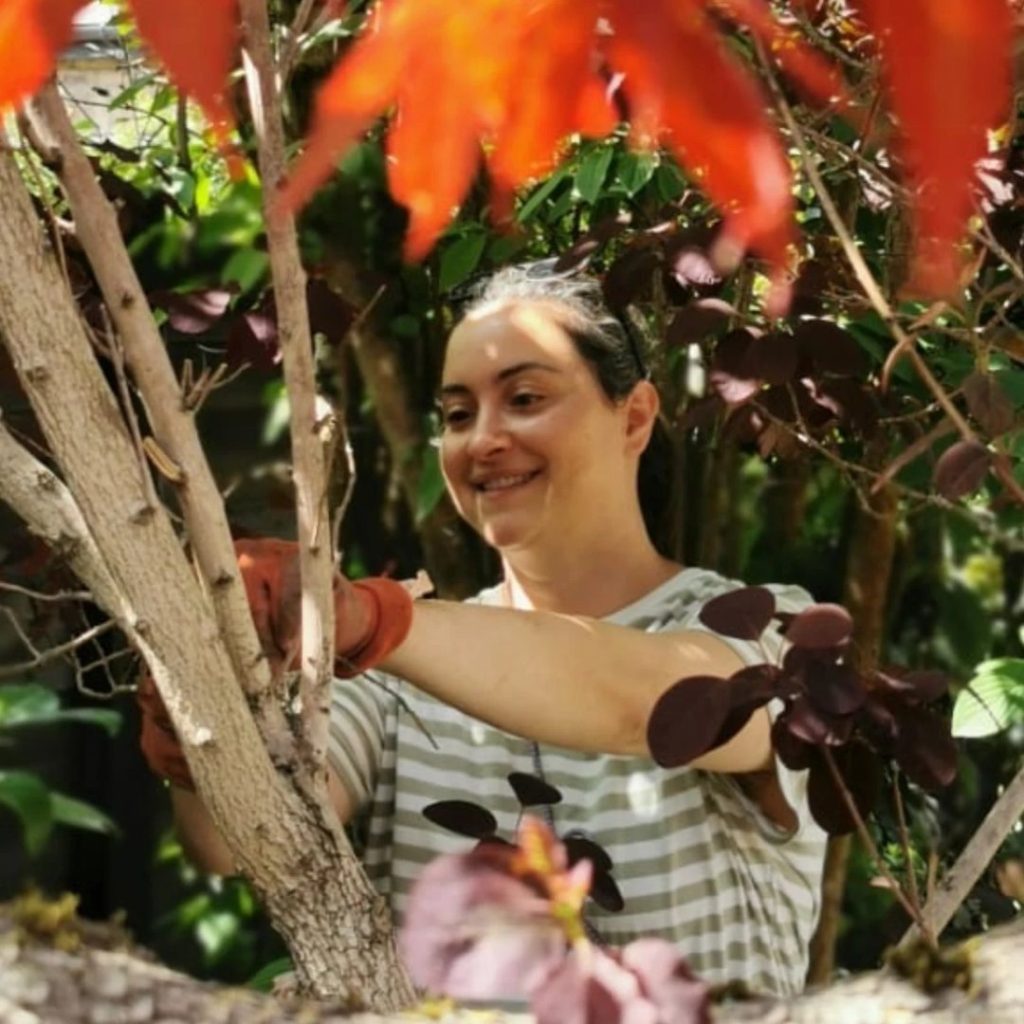
Born in Brescia, Italy, in 1984, I studied in Siena and Milan before spending time living across Europe through Erasmus experiences in Lisbon and later in life in Paris. Since 2013, London has been my home, where I now live with my three children and husband. My creative background began in graphic and infographic design, and for the past ten years I have worked as an infographic designer at Cancer Research UK. During my first maternity leave, I discovered a passion for gardening and horticulture, which led me to complete the RHS Level 2 qualification in Horticulture alongside my full-time career. Although now a British citizen, I still feel deeply connected to my Italian roots, which continue to shape my approach to design, culture, and everyday life.
Instagram: @alicecotelli_gardendesign
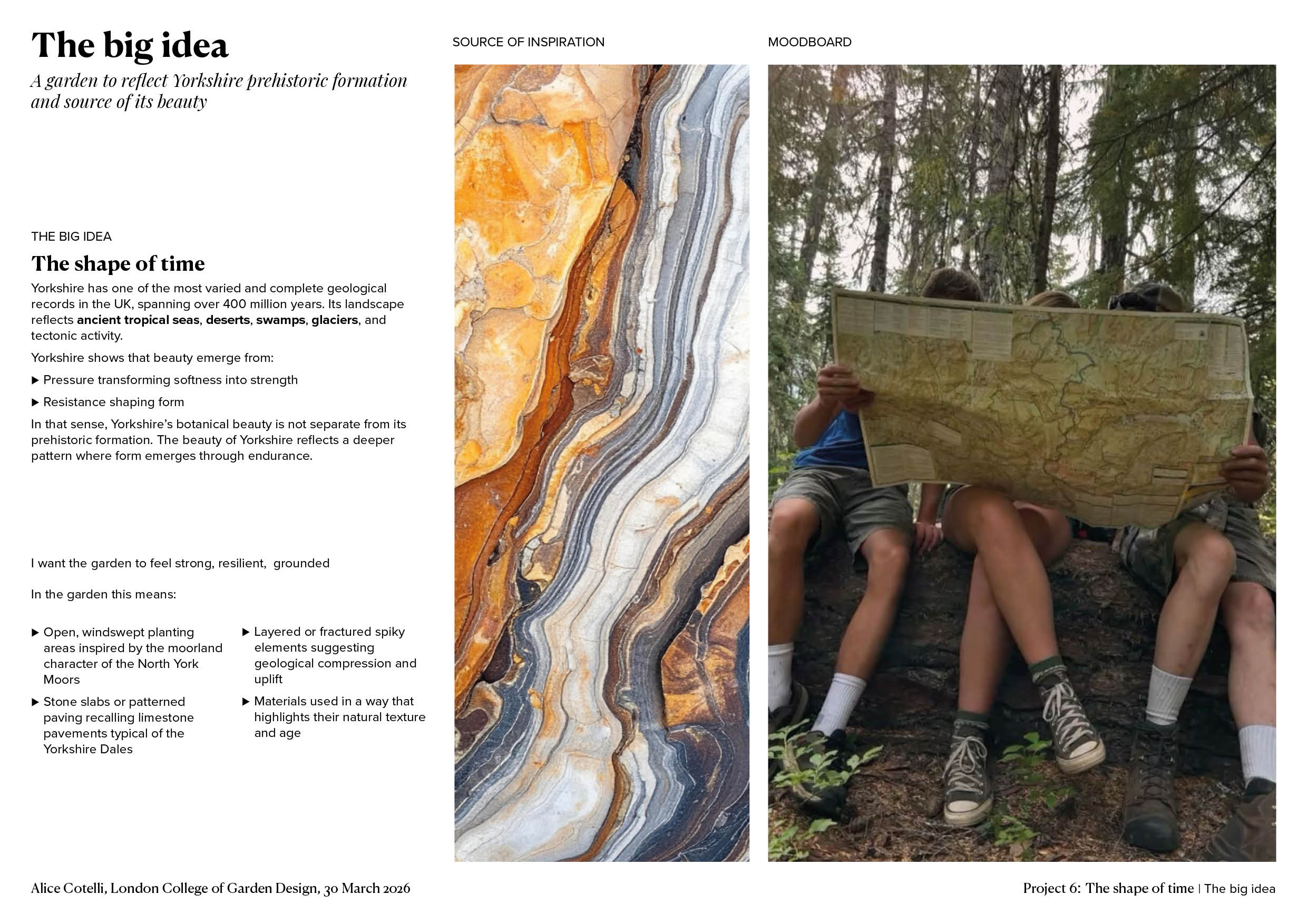
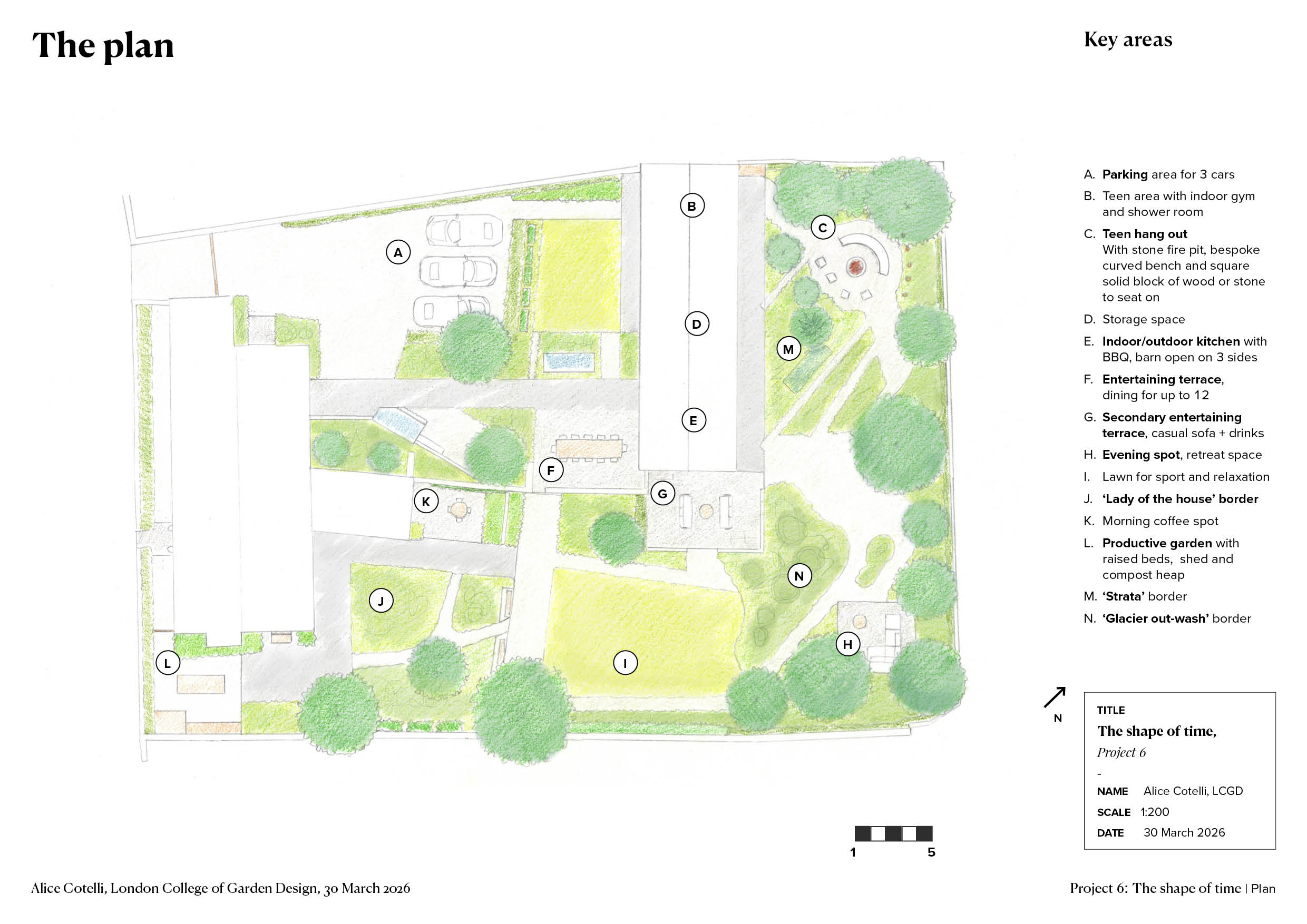
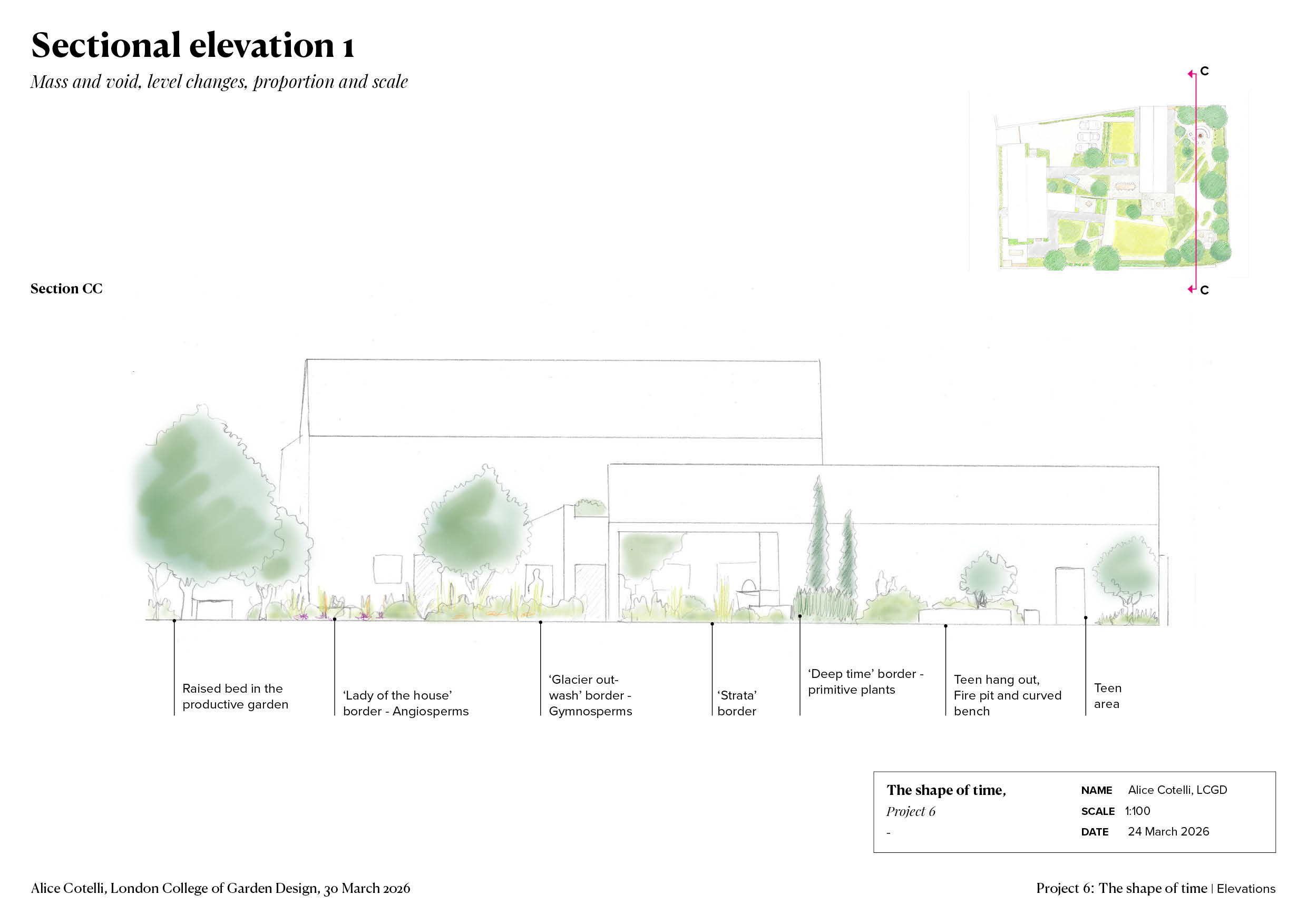
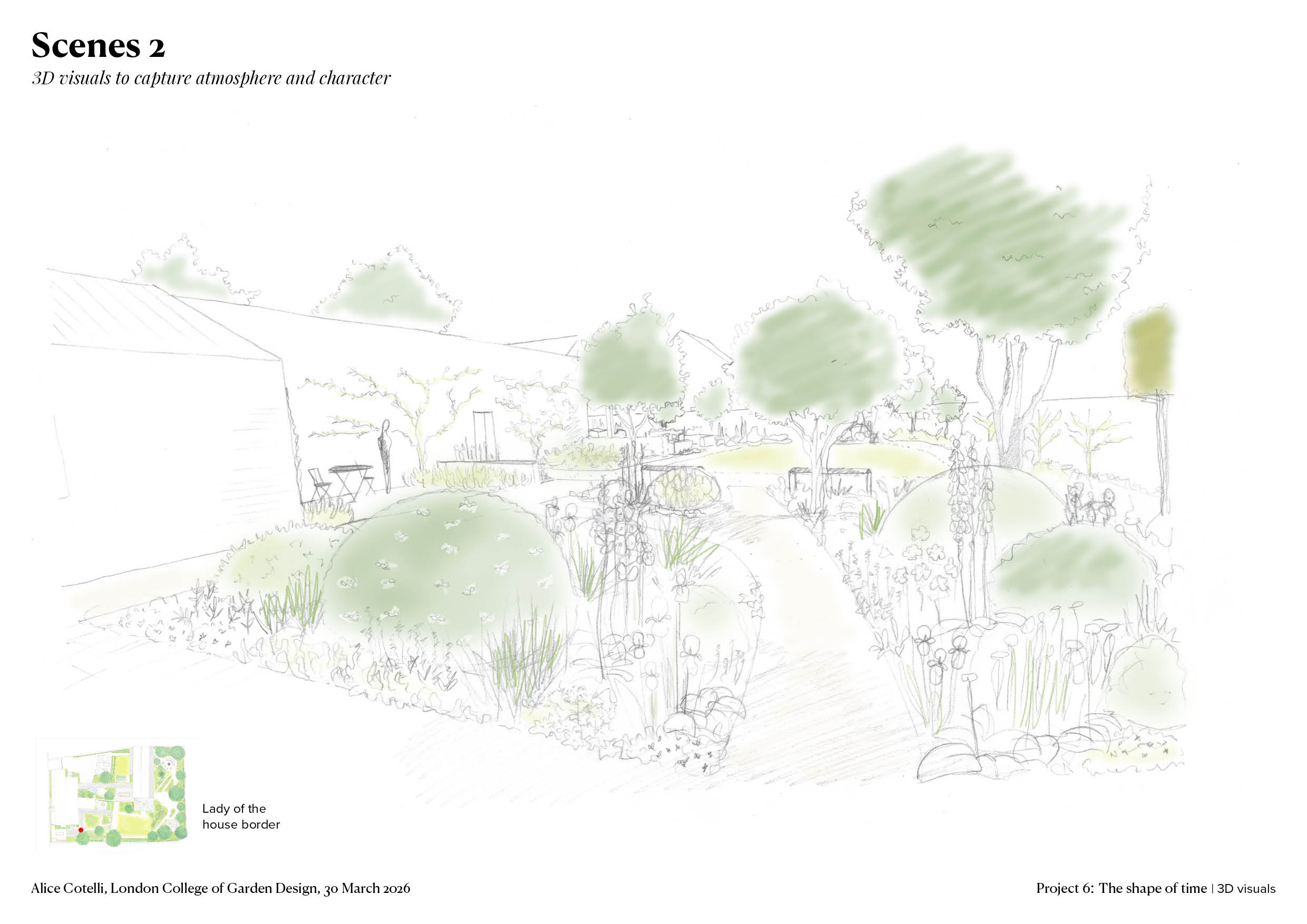
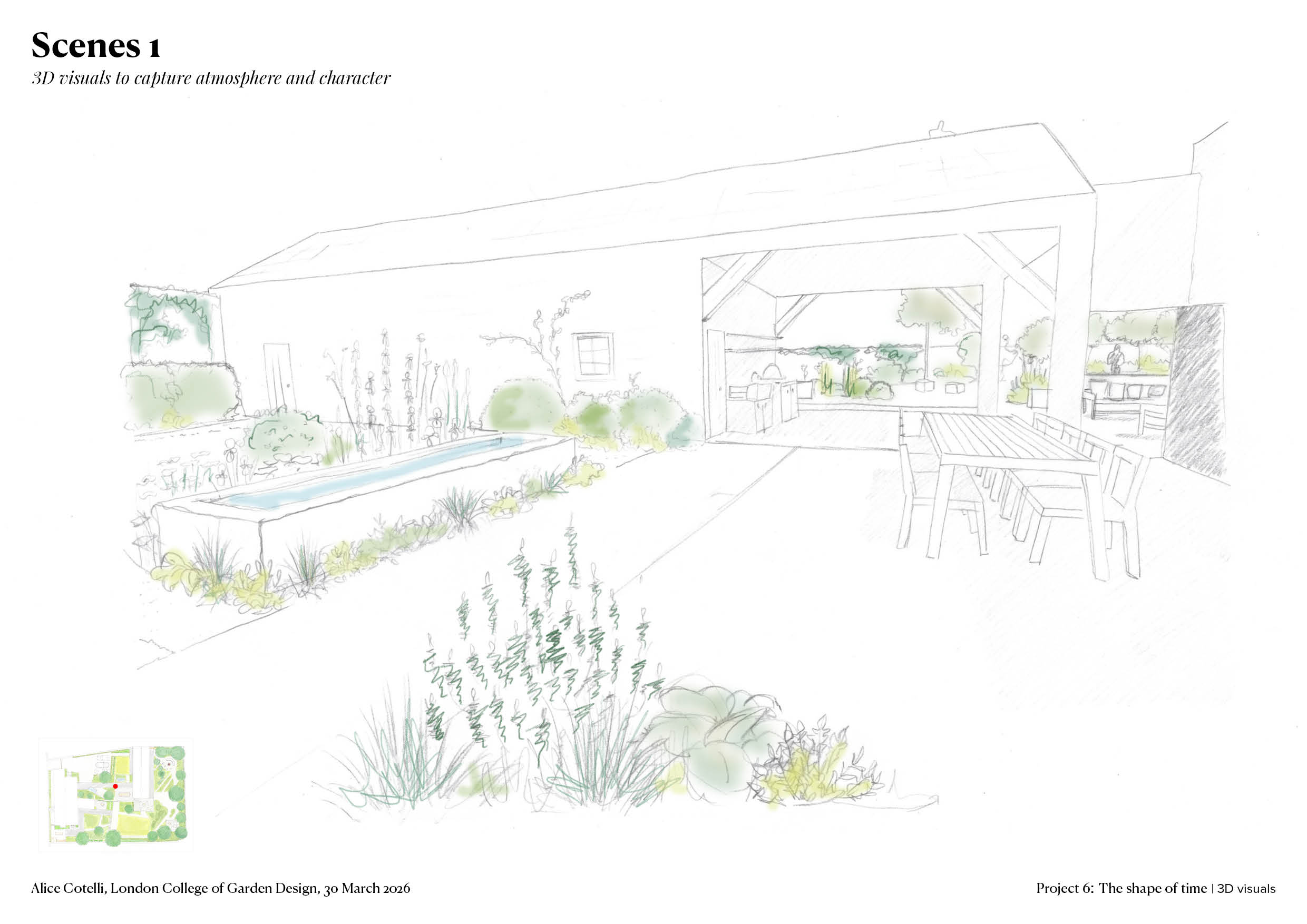
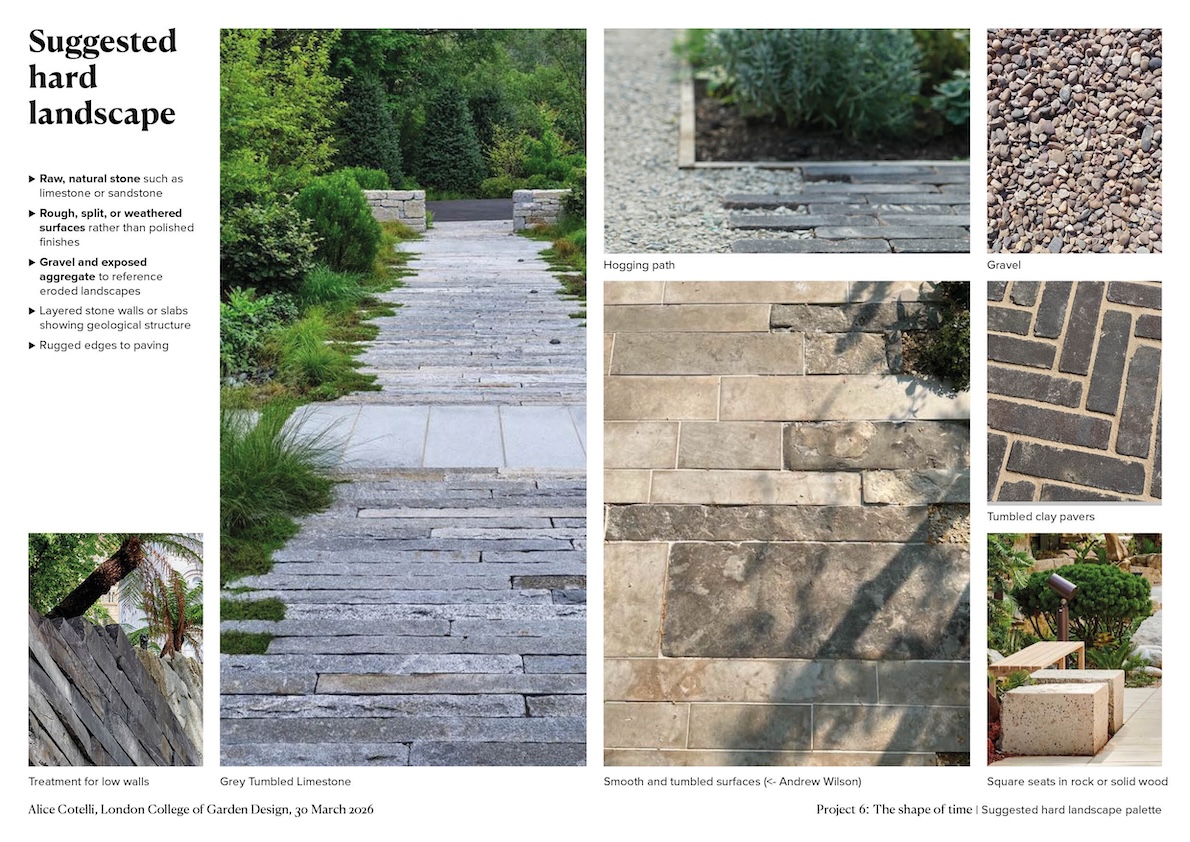
“The Shape of Time” is a landscape design project for The Old Rectory in Dishforth, North Yorkshire, a historic Grade II listed Georgian property. The concept transforms a disjointed garden space into a cohesive, multi-functional family environment that honors its heritage context while addressing modern structural issues like a lack of privacy, poor indoor-outdoor transitions, and deep shade cast by mature trees. Inspired by Yorkshire’s rich 400-million-year geological history, the “big idea” guides visitors through a chronological story of Earth’s botanical evolution as they move across the property. Zoned carefully to maximize the entire site, the layout incorporates distinct family areas including a 3-car parking zone, an indoor/outdoor kitchen barn, multiple entertaining terraces, a productive garden, and a dedicated teen hangout complete with a stone fire pit.
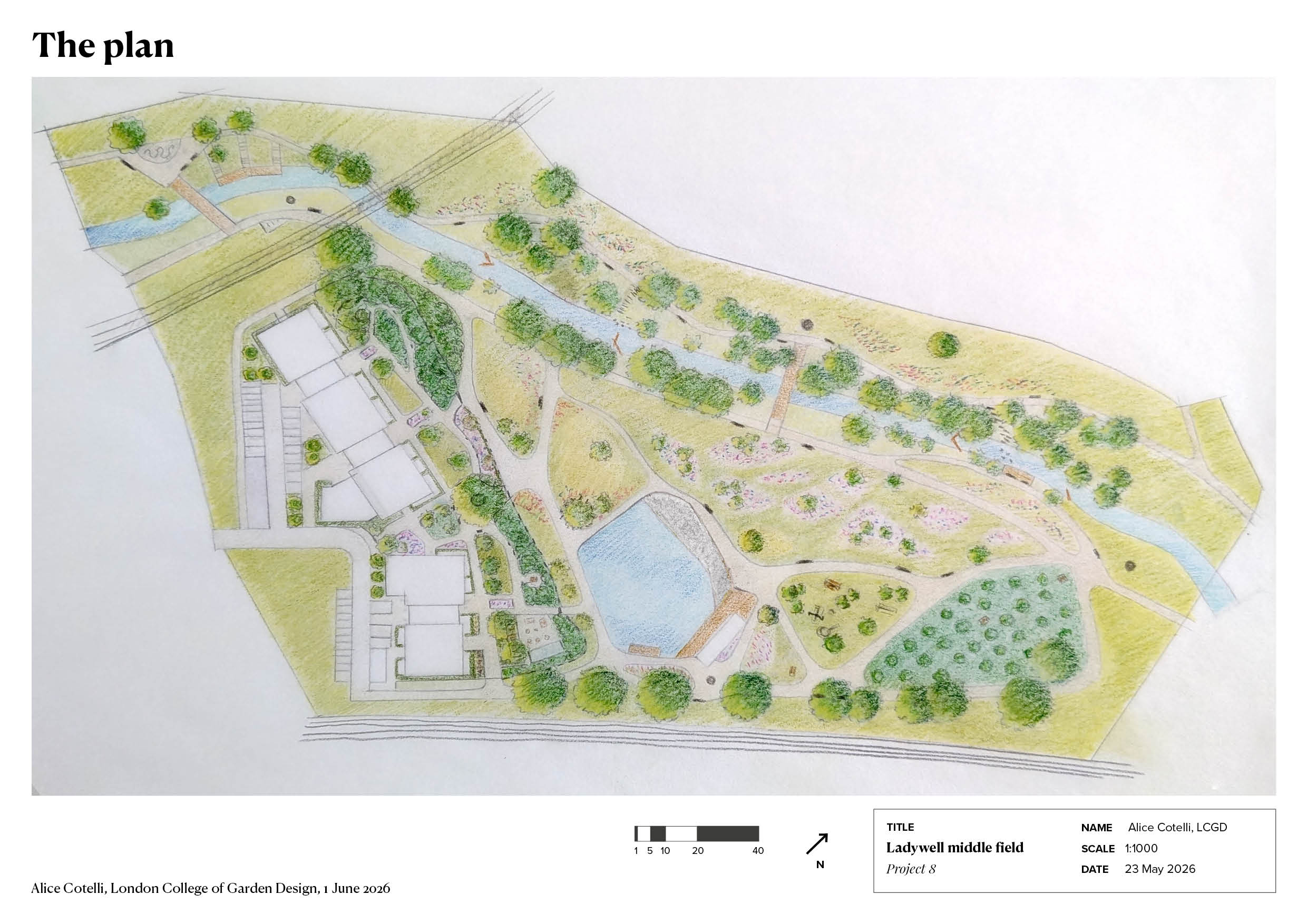
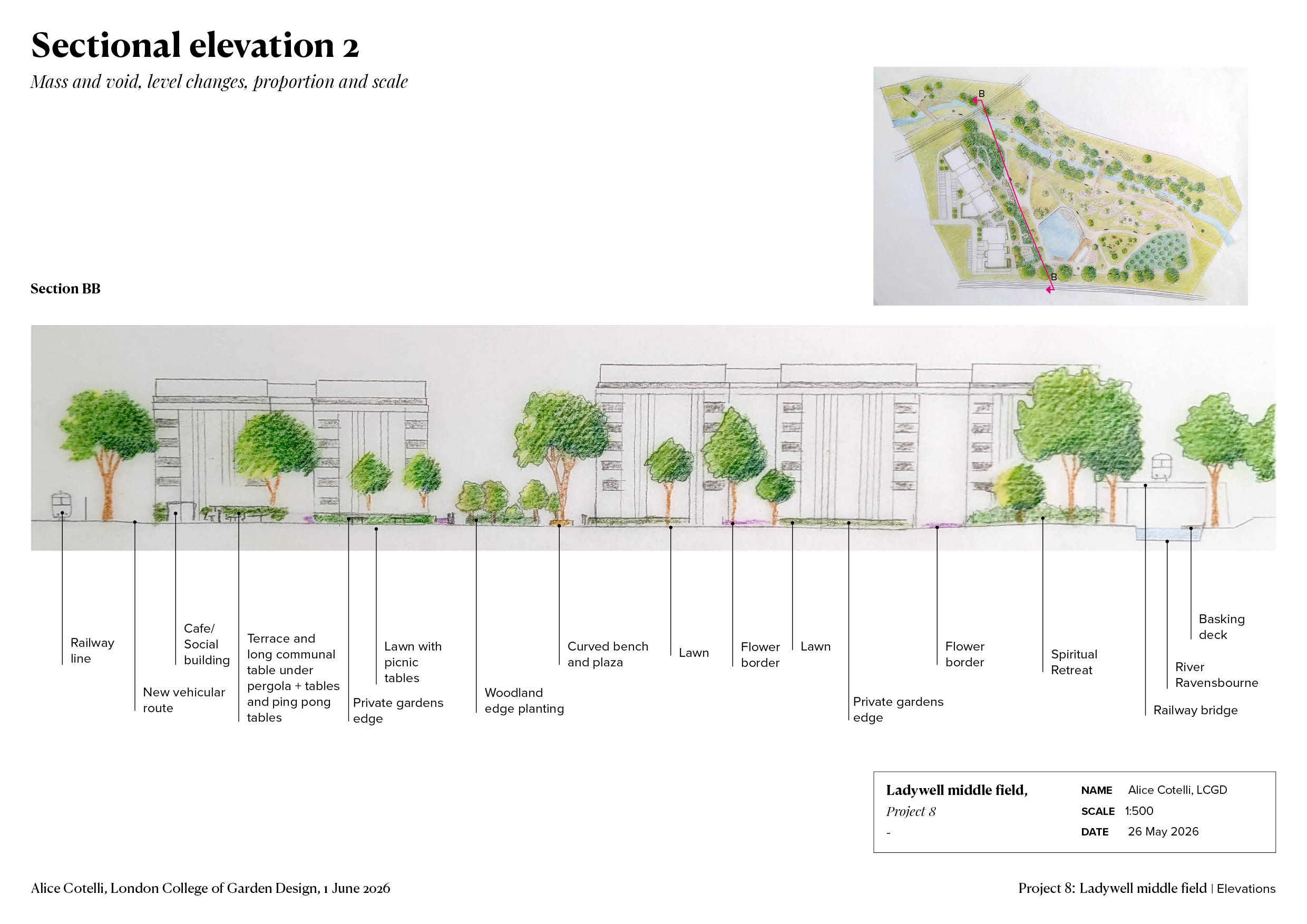
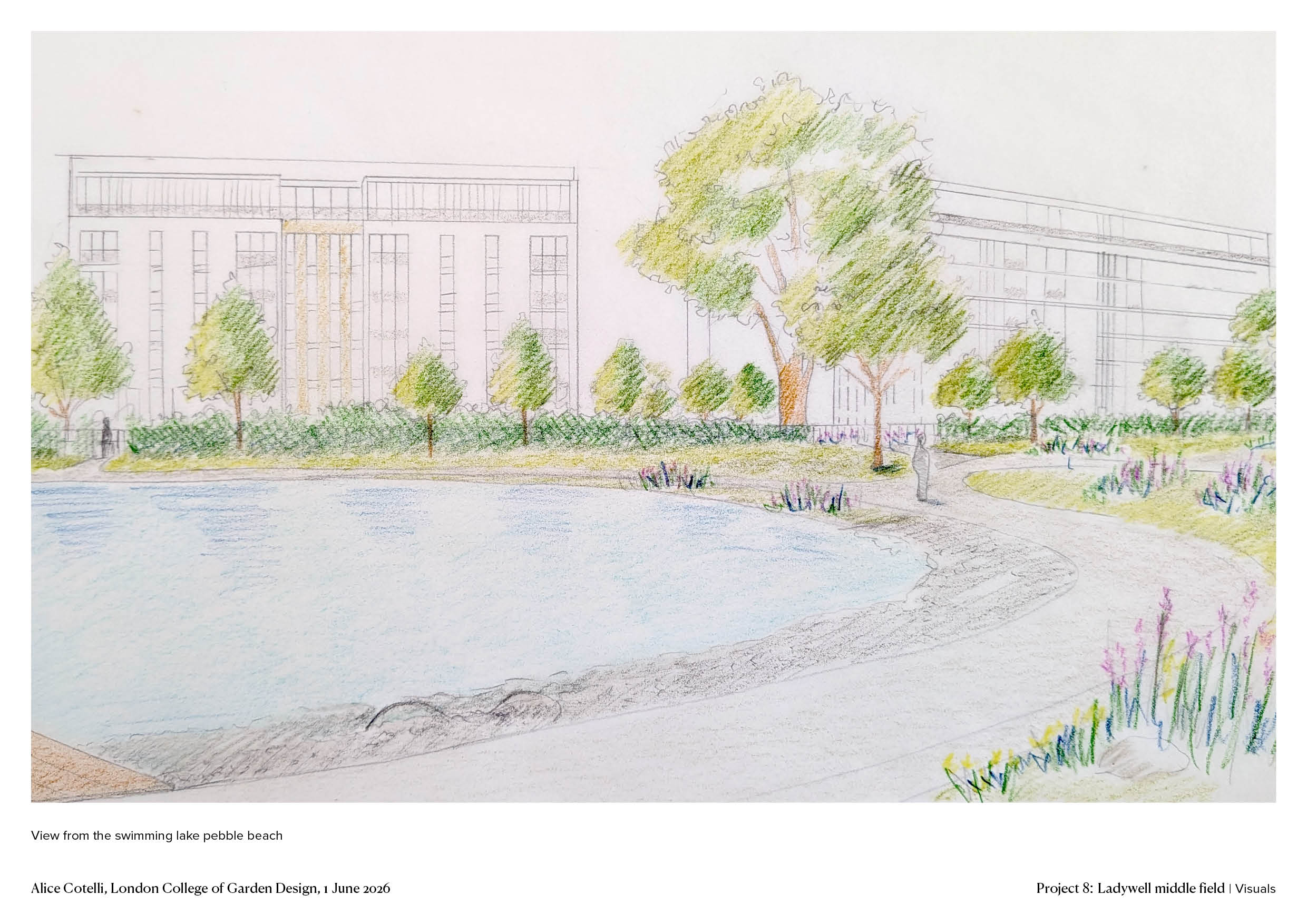
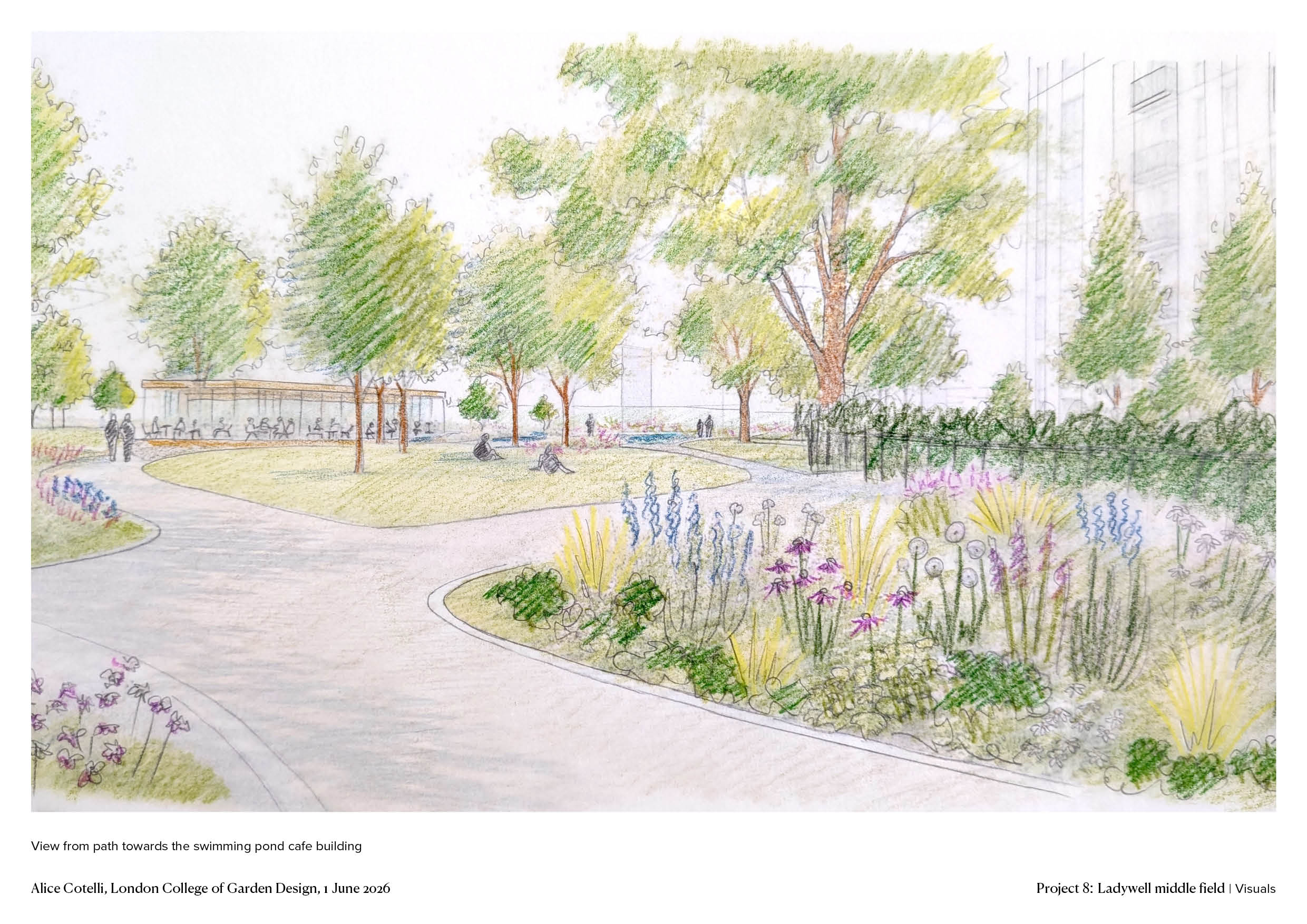
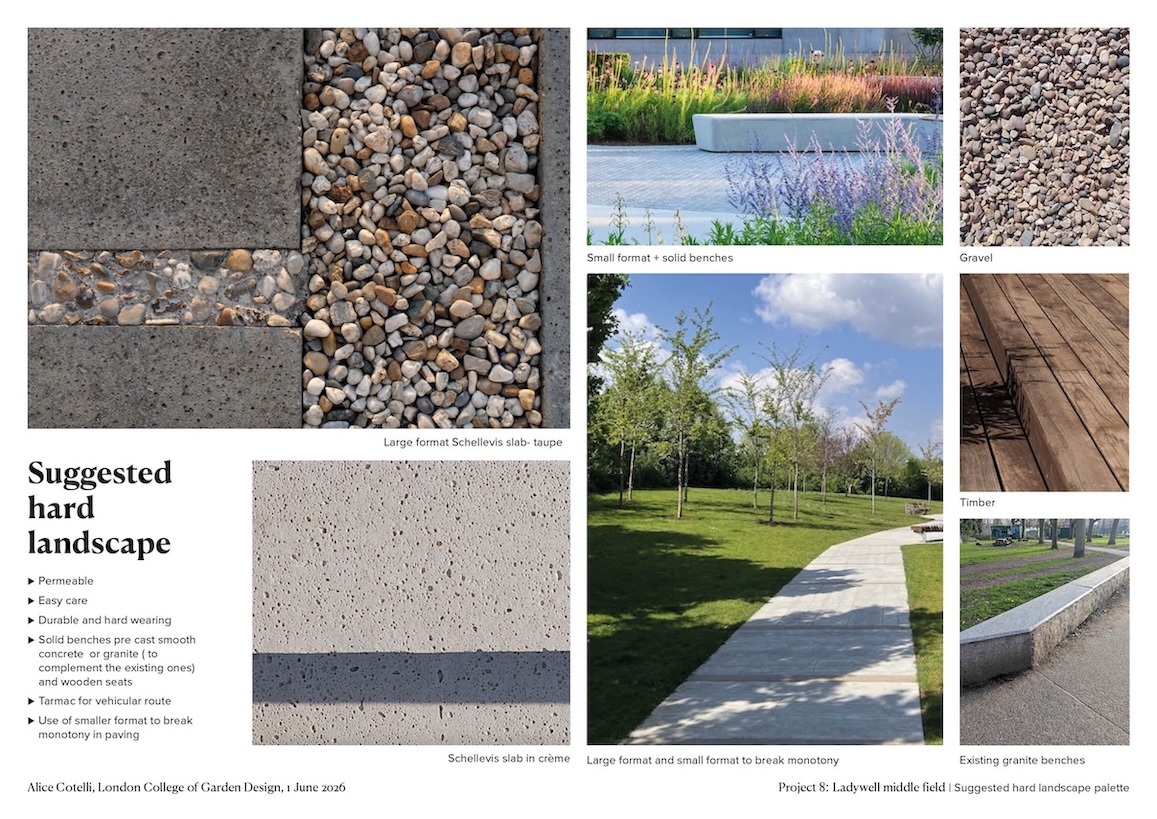
The Challenge: The Middle Field of Ladywell Fields serves as a vital ecological corridor in South East London, but it currently functions primarily as a “transitional” space—a place people pass through rather than stay in. The design brief required the creation of a restorative, social landscape for new hospital staff residents and the wider public, balancing private quietude with communal interaction. The Big Idea: The design is structured by the geometry of enlarged, smooth, angular pebbles—inspired by the stones of the River Ravensbourne. Rather than placing objects within a field, the pebble shapes themselves define the site’s plazas, terraces, seating areas, and gardens. The “negative space” between these forms creates flowing channels for movement, water, and social activity.
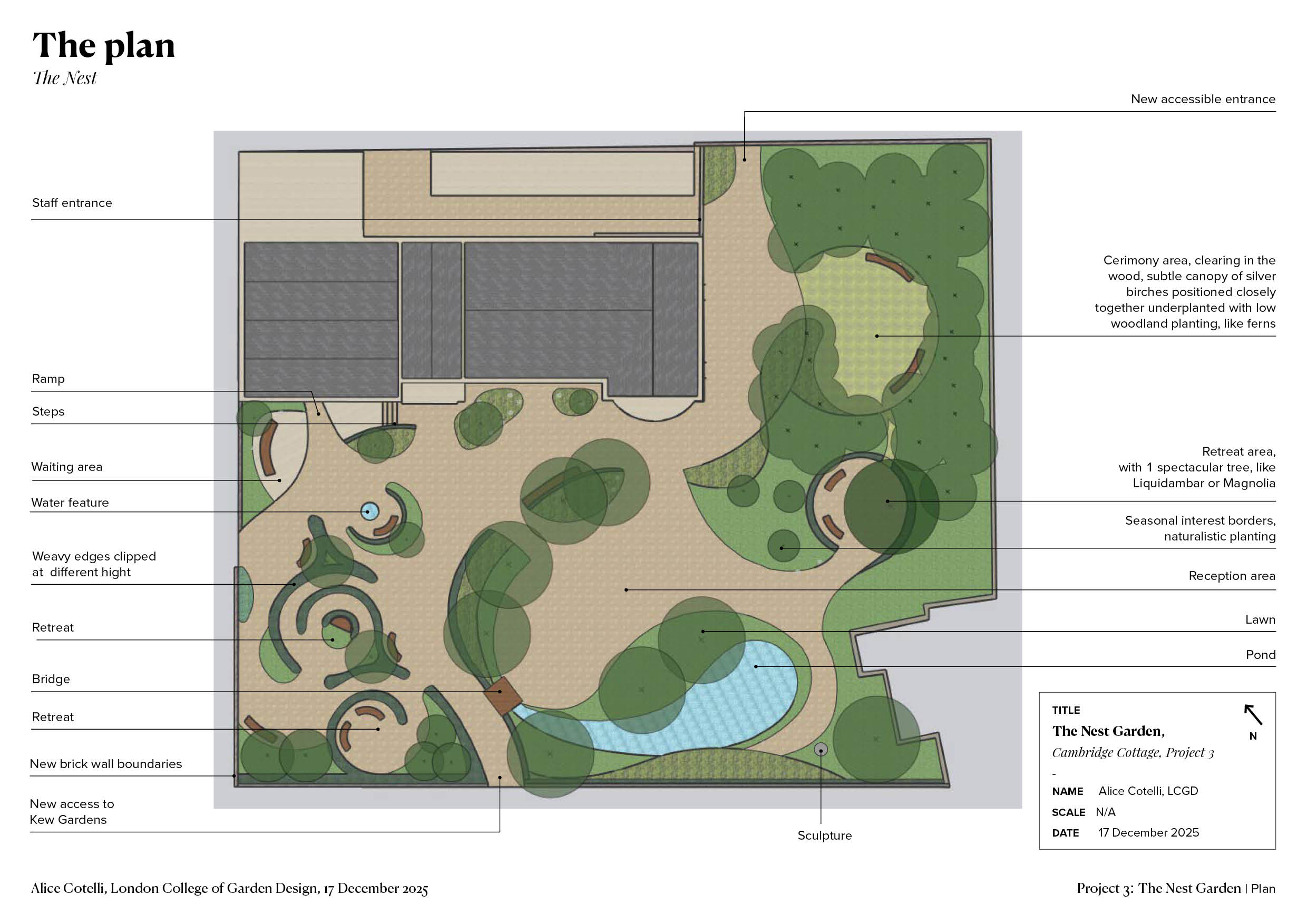
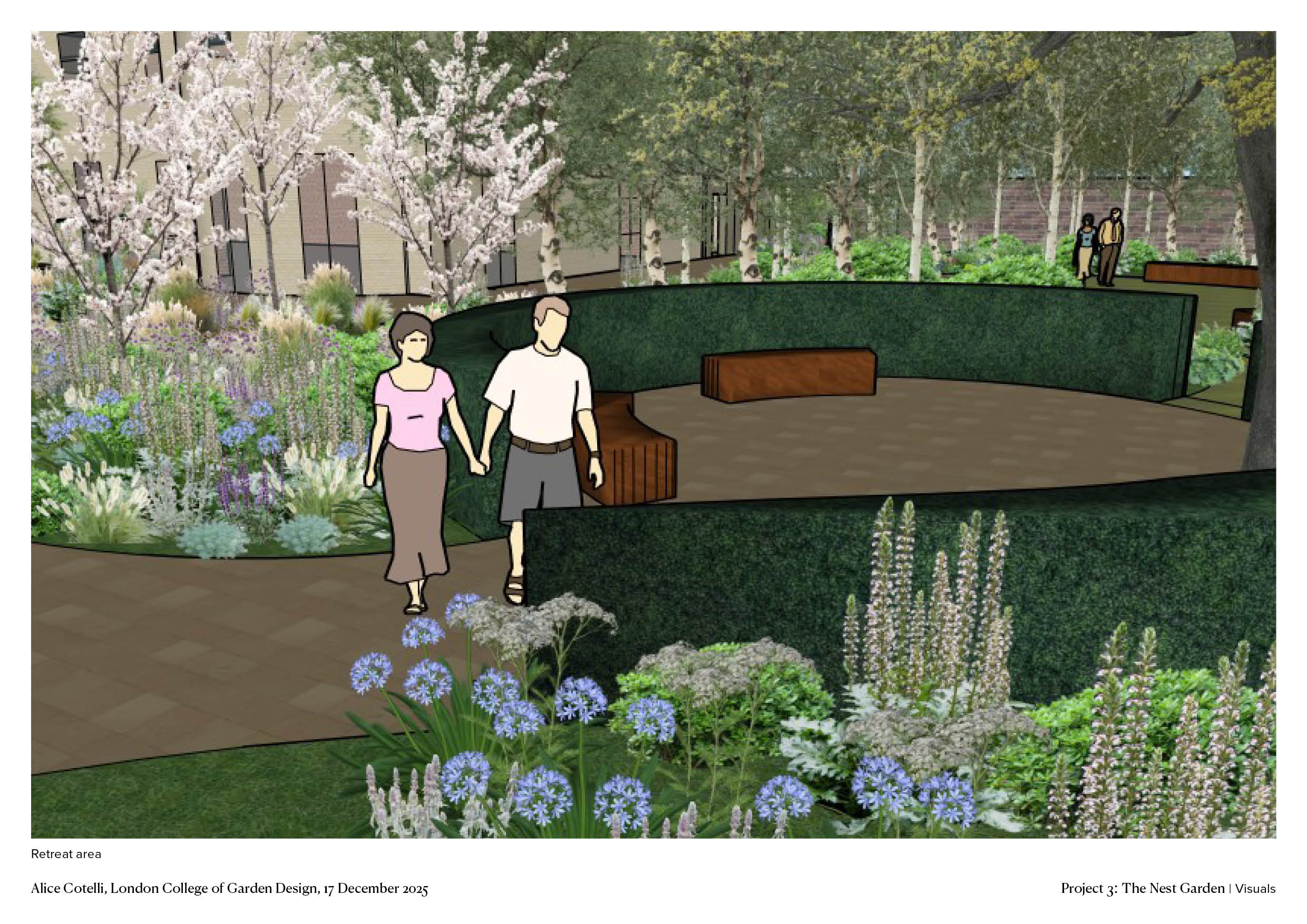
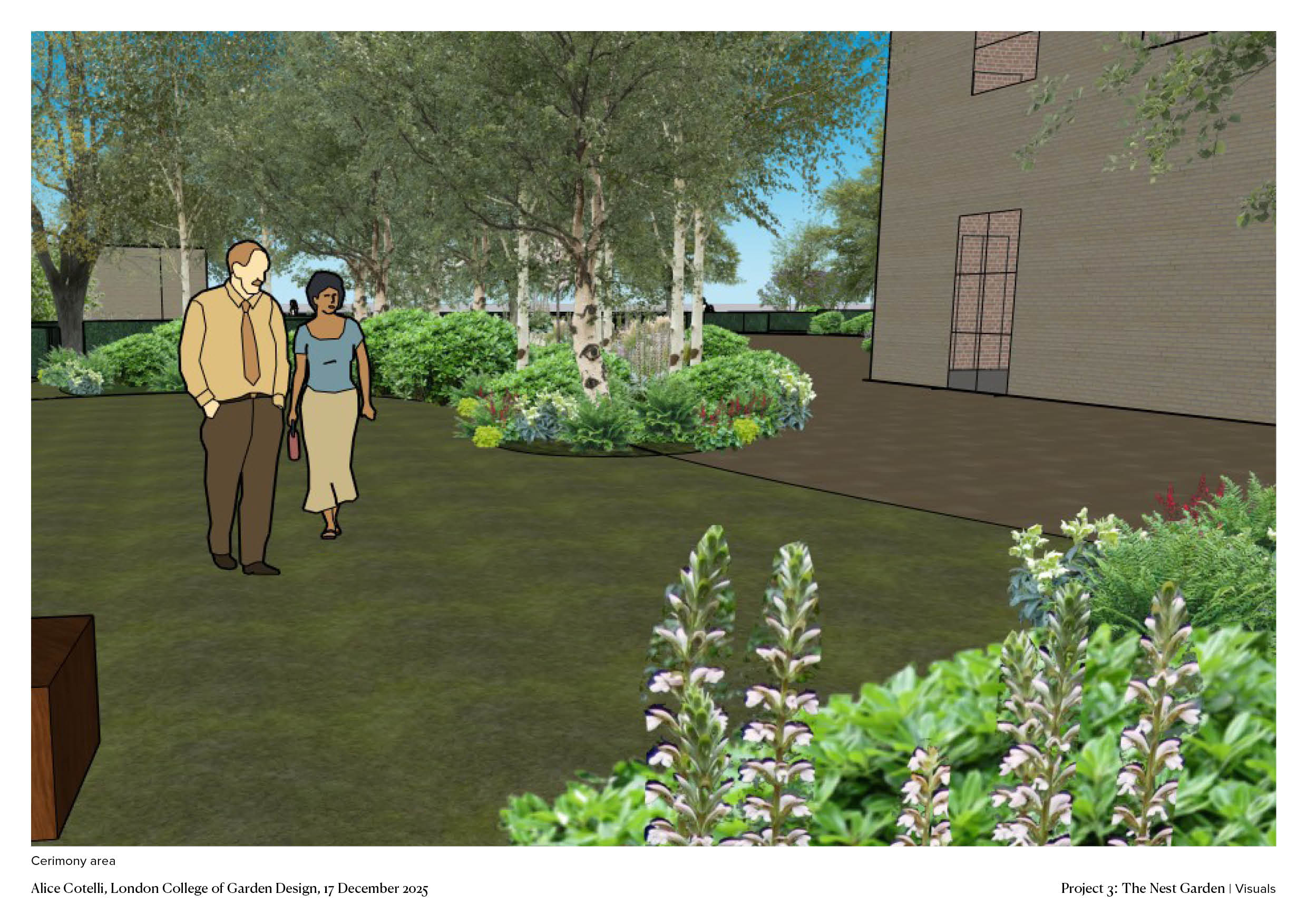
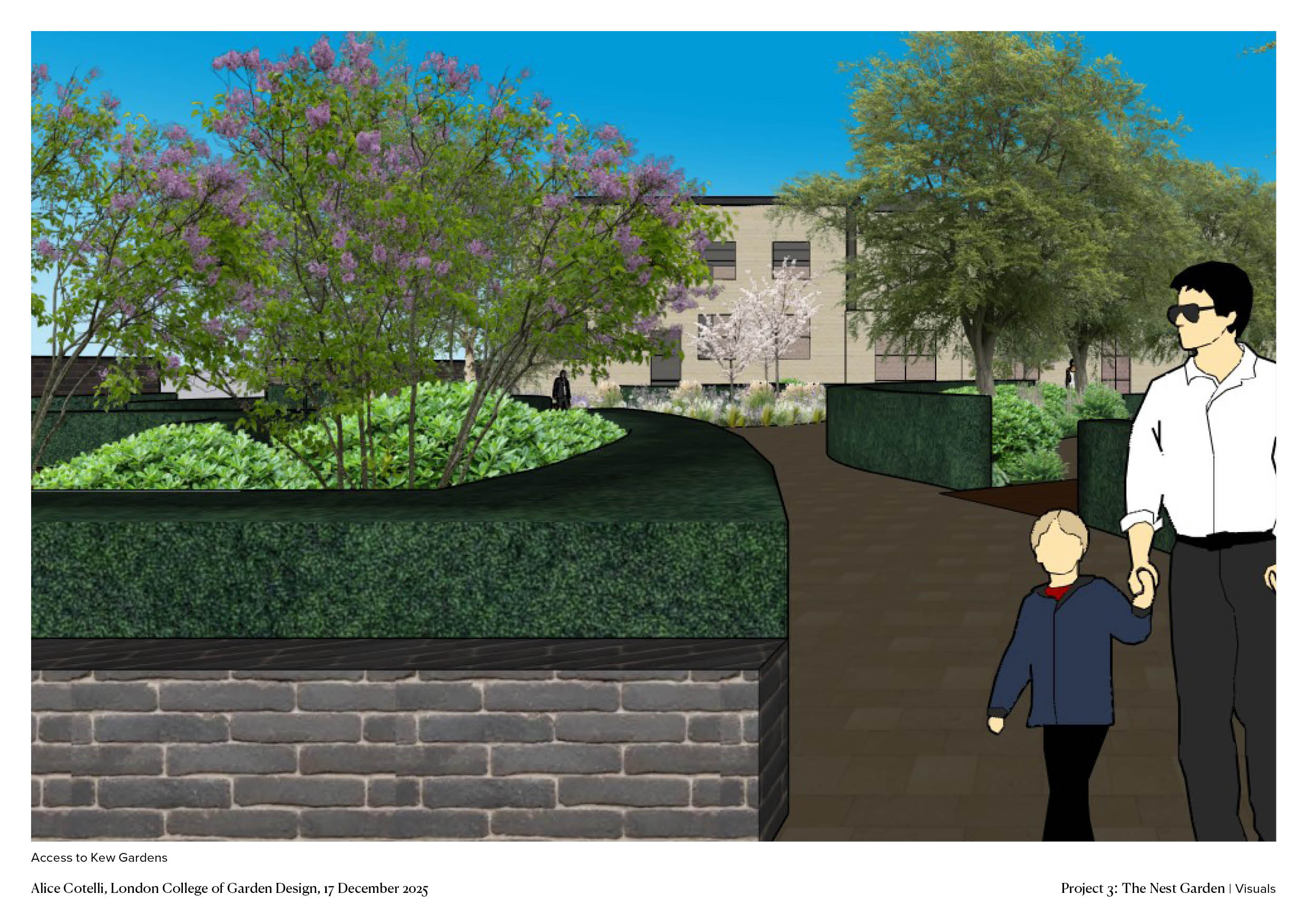
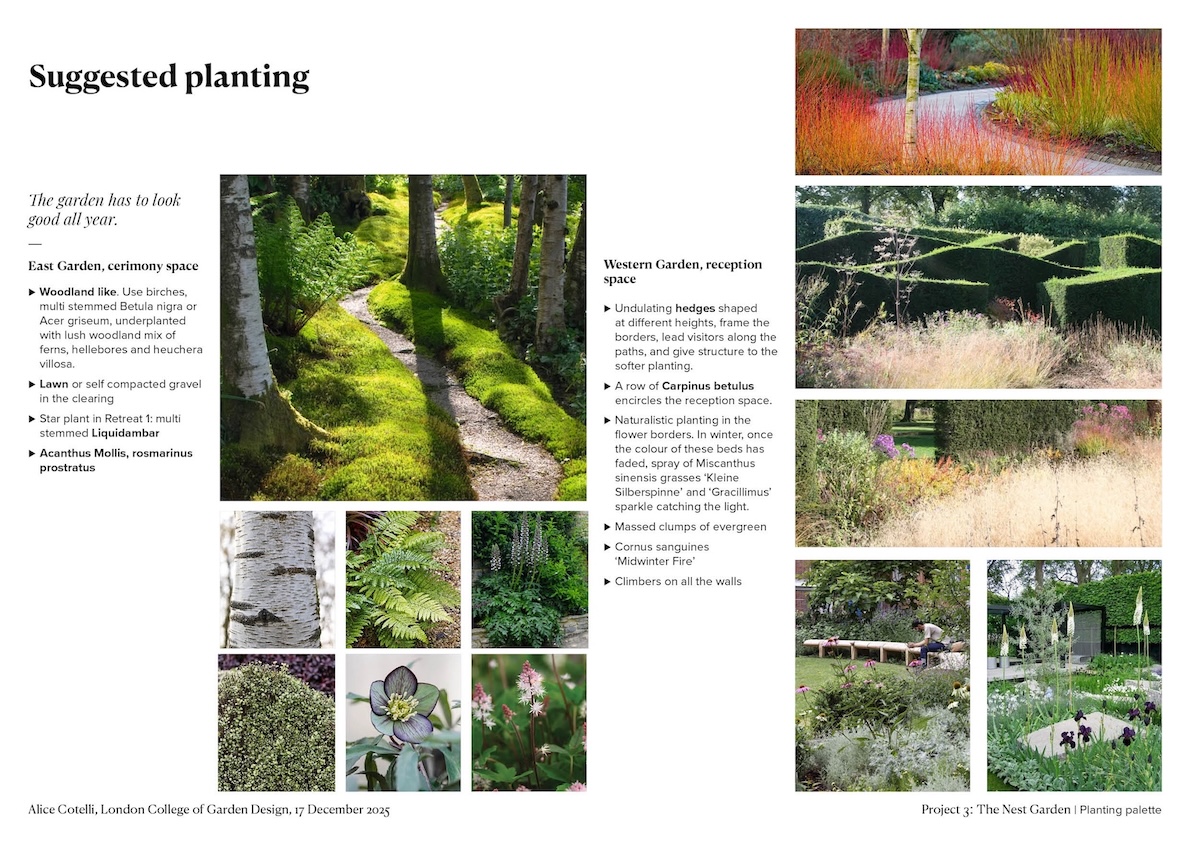
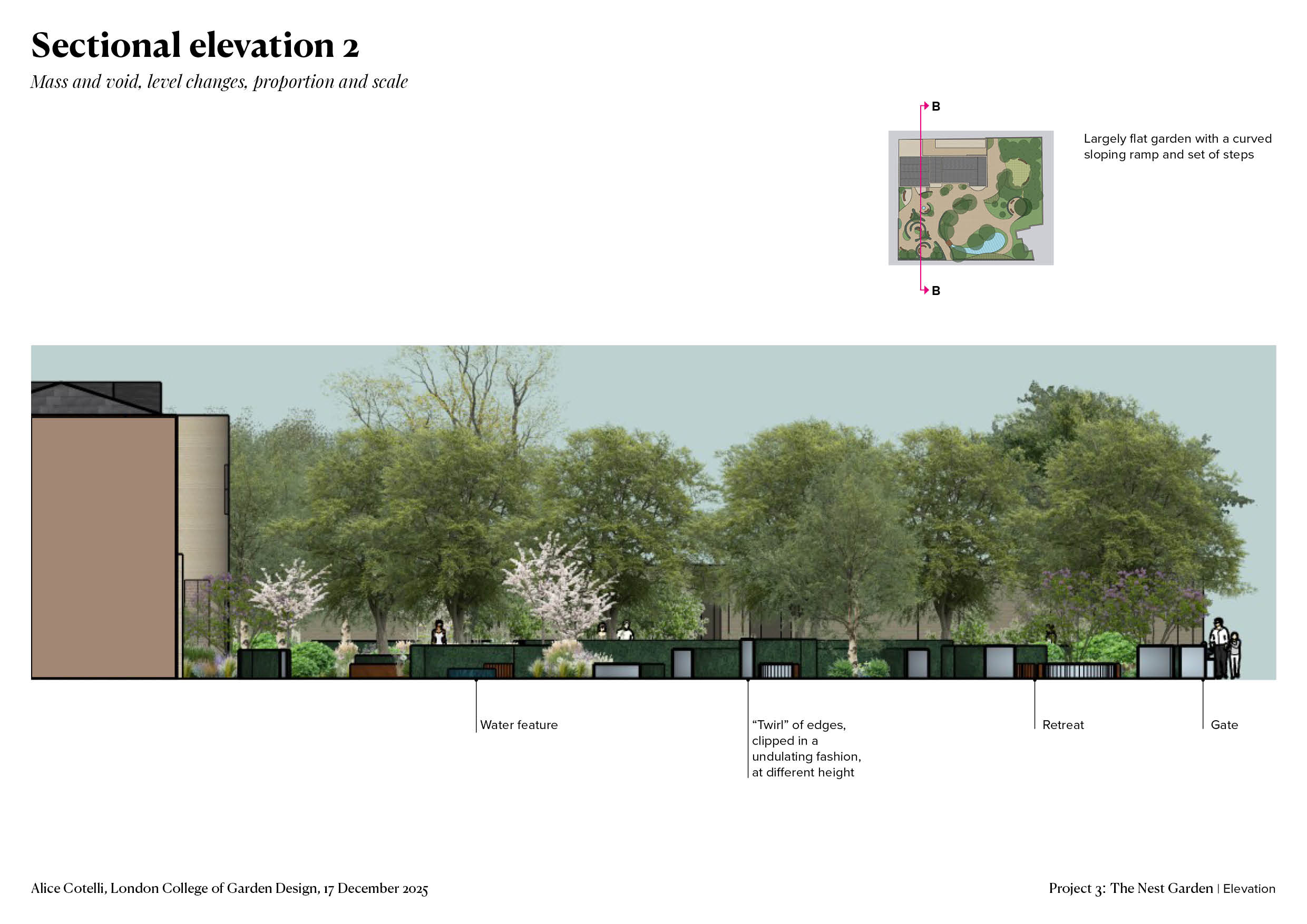
The Nest Garden is a conceptual redesign of the grounds surrounding Cambridge Cottage, an historic event venue within Kew Gardens. Inspired by the idea of a nest as a place of gathering, protection, and celebration, the design transforms an underused lawn into a series of interconnected outdoor rooms that support weddings and year-round events. The proposal introduces a woodland-inspired ceremony space, intimate retreat gardens, and flexible reception areas connected by curvilinear paths and layered planting. A redesigned accessible route improves circulation and inclusivity while creating a more welcoming arrival experience. This project demonstrates skills in site analysis, concept development, spatial planning, accessibility design, planting design, and 3D visualisation, balancing heritage character with a contemporary landscape approach.
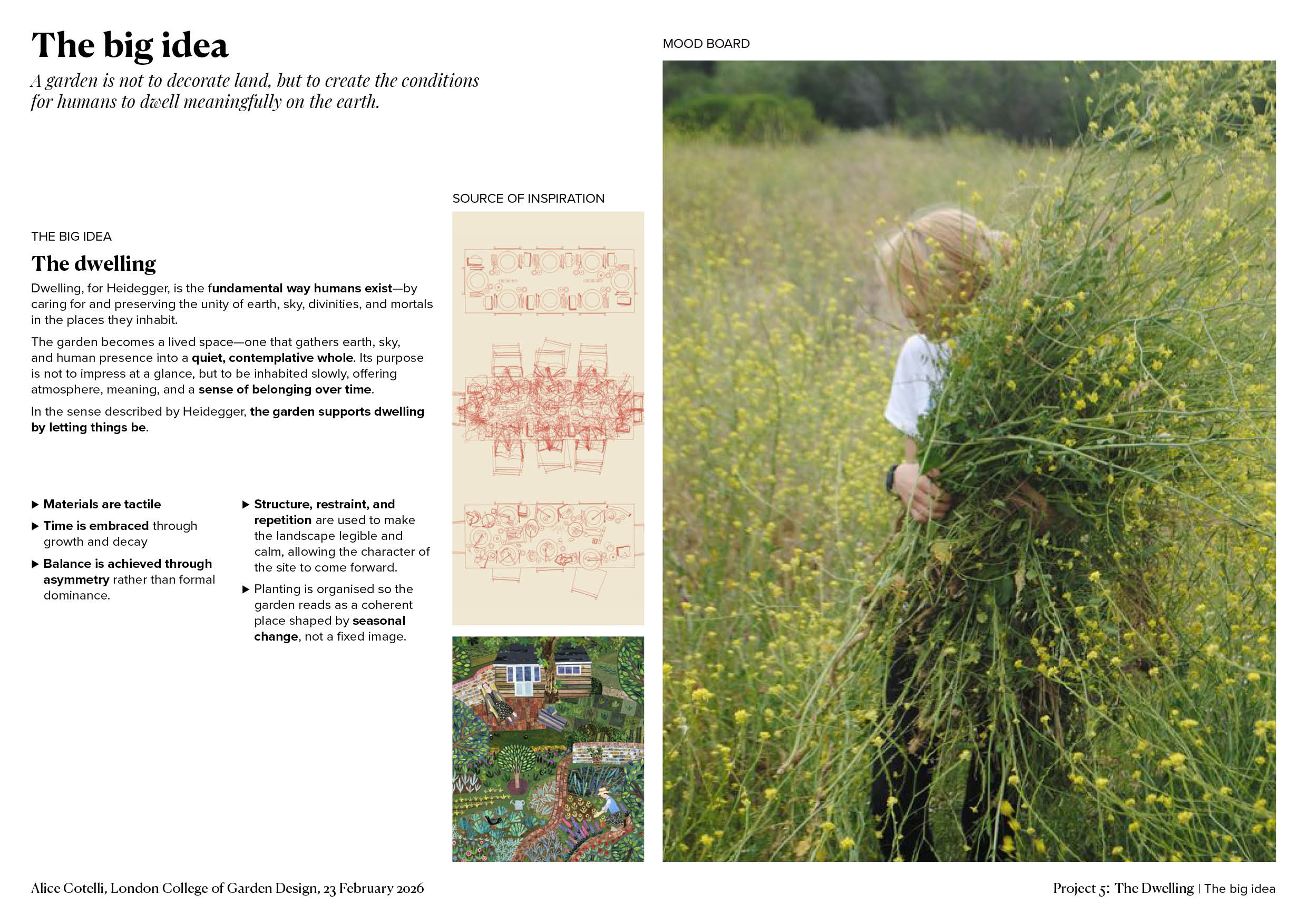
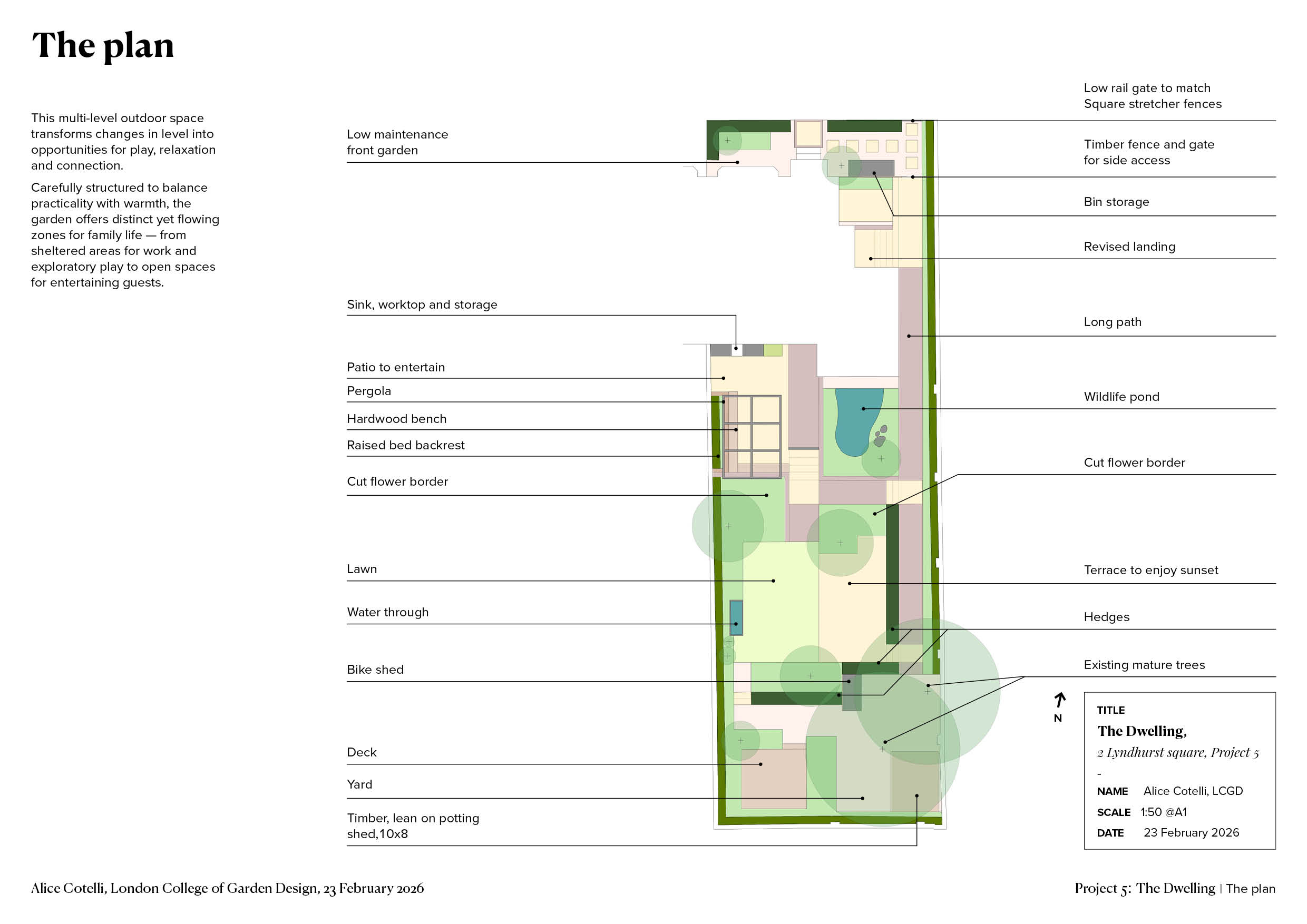
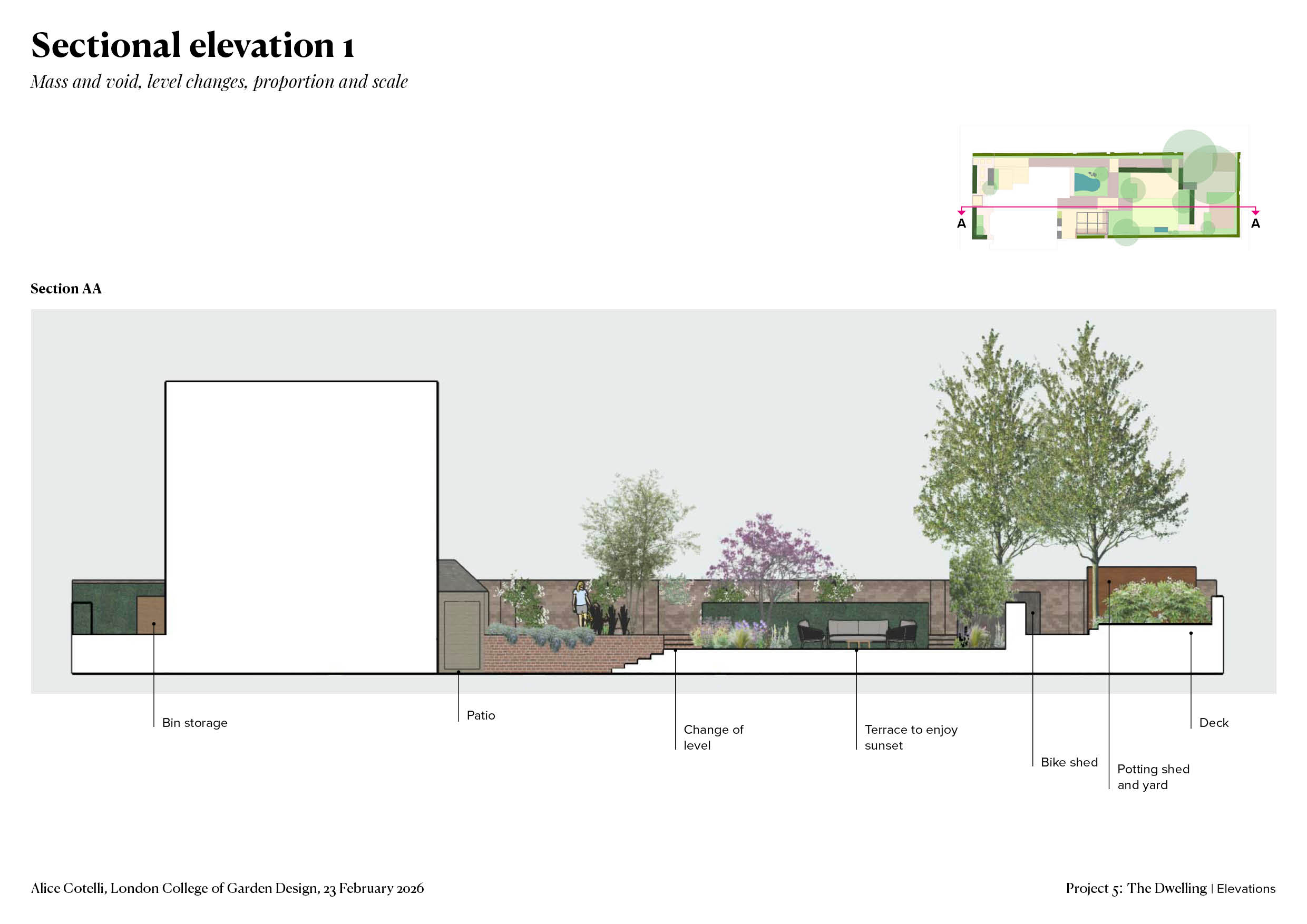
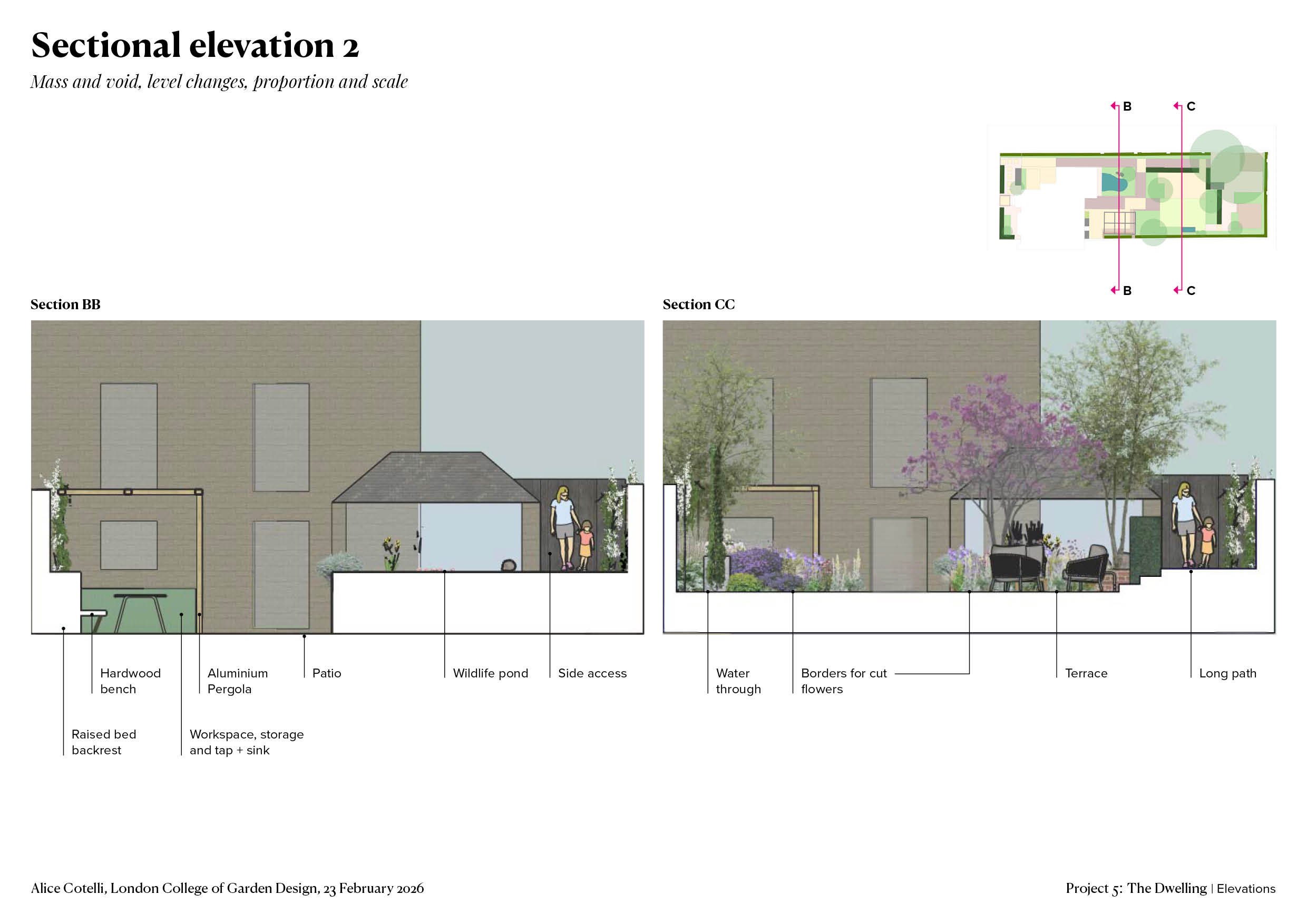
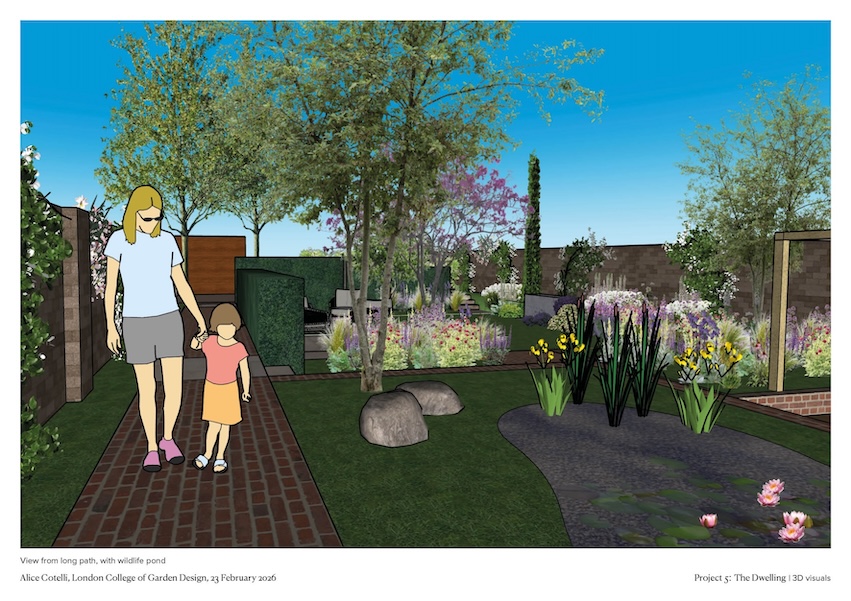
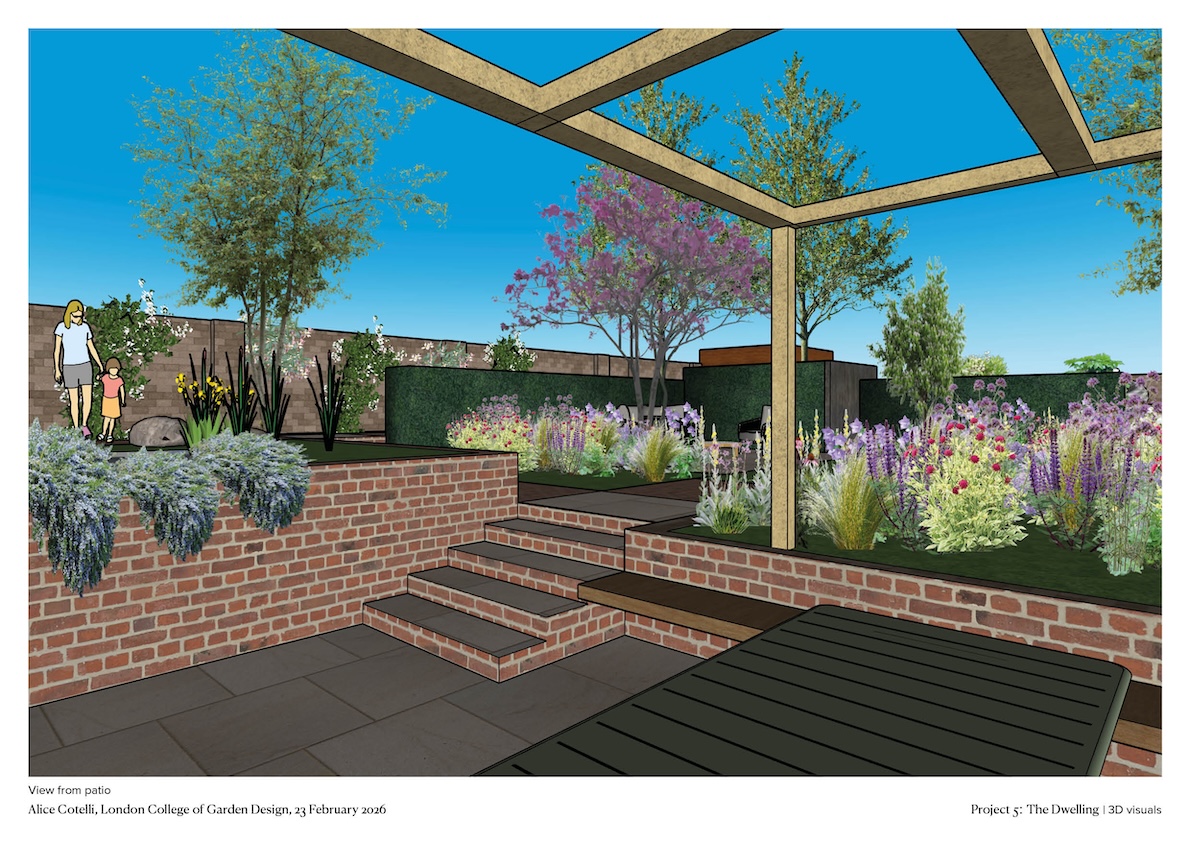
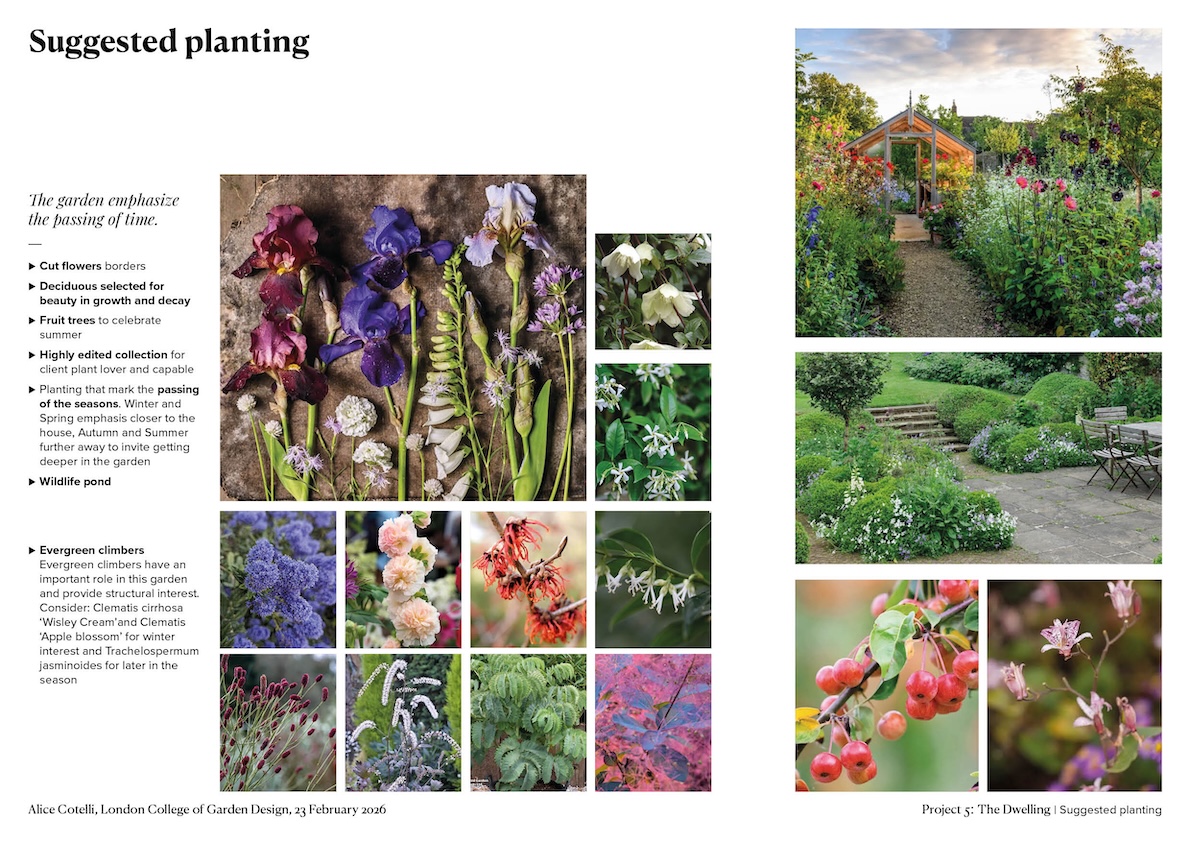
The Dwelling is a conceptual redesign of a Grade II listed Victorian garden in South London. Responding to significant level changes, drainage challenges, and the needs of a growing family, the design creates a seamless relationship between house and garden while balancing practical requirements with a calm, immersive landscape experience. Inspired by Japanese garden principles and Heidegger’s concept of dwelling, the proposal transforms changes in level into opportunities for gathering, exploration, and reflection. A sequence of terraces, productive planting, wildlife habitats, and family spaces creates a garden that evolves through the seasons and encourages a deeper connection with nature. The project demonstrates skills in site analysis, concept development, residential landscape design, grading and drainage considerations, planting design, technical drawing, and 3D visualisation.